






Q&A
{ who gives what? }
Friday, July 18th, 2014 | etiquette, Q&A | No Comments
Thanks to our friends at Emily Post for this great reminder:
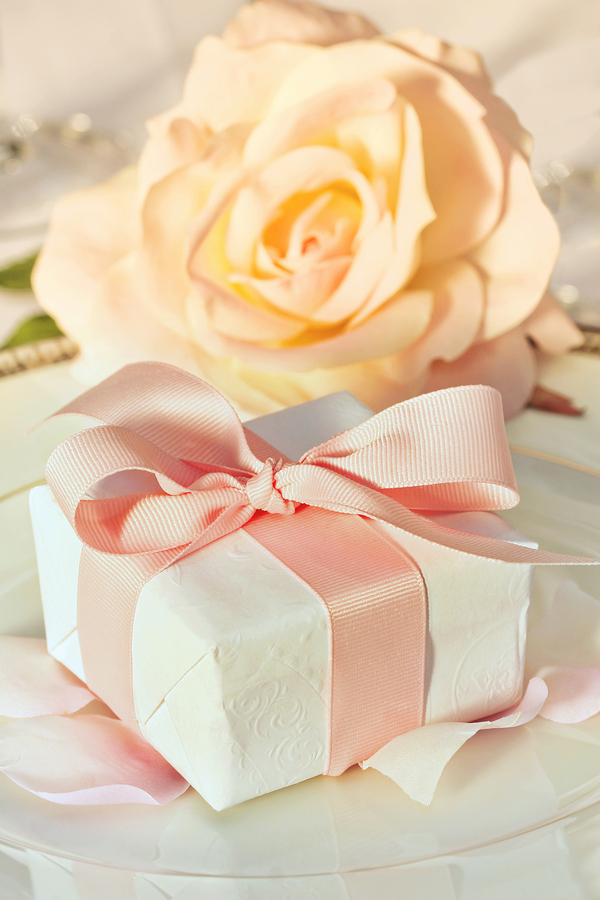
Special occasions call for gifts, and weddings are no exception to this rule. From Do I really need to send a wedding gift? to What if I already brought a gift to a shower?, here are some guidelines for wedding gifting.
Engagement Gifts
Close friends and family usually do give the couple an engagement gift, and in many parts of the country it is customary to bring a gift to an engagement party. An engagement gift is more of a gesture of affection and needn’t be expensive or elaborate. Something simple, such as a picture frame, cookbook, white-clad furniture, or a nice bottle of wine to start a collection, is the way to go.
Wedding Gifts
As per tradition, it is expected that wedding guests give gifts to the bride and groom. When choosing a gift keep your relationship and affection for the bride and groom as well as your budget in mind. Whether you attend or not, send a gift in appreciation of this most special invitation and to honor the marrying couple.
Bridal Party Gifts
It’s traditional for the bride and groom to give gifts to the members of their bridal parties. Whether this means earrings for the bridesmaids, cufflinks for the groomsmen, or monogrammed tumblers for all, don’t over think it. Keep it simple but significant to show the bridal party your appreciation and allow them to remember the occasion in the future.
Shower Gifts
For guests, the key to selecting shower gifts is finding something the couple can use while staying within your budget. If attending more than one shower, it’s okay to bring a gift to the first one and then bring a card or smaller token gift to the others. Regardless of your gift choice for a shower, don’t forget to plan for a wedding gift, too.
Gifts for Guests
Wedding favors are entirely optional but have become a popular way for the bride and groom to show their appreciation and thank their guests for being with them on their special day. These are usually smaller commemorative items-mini boxed chocolates, little jars or sachets of candy, match boxes printed with the date, personalized packets of wildflower seeds-presented to guests atop a place setting or arranged on a table for taking home.
All in all, it is important to keep in mind that it is not the price tag that matters, but rather the thought that really counts.
{ put those dancing shoes on… }
Friday, October 19th, 2012 | Q&A | No Comments
Tips on Breaking in your Wedding Heels
From our friends at Weddingful.com:
The heels have been chosen and they’re gorgeous! Now the question is, how do you break in these babies so you can enjoy your wedding day.

Tip #1: Wear them in: We know you don’t want to scuff your beautiful shoes, but they must be worn in. Wear them at the office (at your desk of course) or wear them around the house. Pop them on for half an hour to an hour a day.
Tip #2: Bend & stretch: We saw this tip on Lauren Conrad’s website The Beauty Department. Stretch and bend the heels upward and downwards (if the shoe permits) a few times. Use a hair dryer and heat the heesl for 2 to 3 minutes and repeat.
Tip #3: Buy the right size: This might sound silly, but lots of women will buy the wrong size of shoe, perhaps it was the last pair on sale or you just couldn’t hunt down your size. We recommend you buy a perfect fitting shoe. If a shoe is too big, you risk tripping and if it’s too small, we guarantee blisters will form.
Tip #4: Sandpaper the sole: If you find the heel slippery, take a piece of sandpaper and rub against the sole.
Tip #5: Have a backup plan: Let’s not lie to ourselves, even if your heels are super comfortable, you will likely be tired by end of day. So pick a pair of pretty crochet TOMS, sparkly flip flops or satin ballet flats for a quick change. These are perfect to switch in throughout the day.
{ to destination or not to destination…? }
Friday, October 12th, 2012 | etiquette, media, Q&A, Uncategorized | No Comments
ORIGINALLY PUBLISHED IN THE CALGARY HERALD, IN LISA HANSLIP’S COLUMN “I DO, BUT DON’T…”

Q. My fiancée and I can’t quite decide what to do about our wedding. She is the youngest of 10 kids and her immediate family alone now numbers about 52 people, not to mention all the cousins and aunts and uncles. I have three siblings (all married with kids), countless aunts, uncles and cousins, and my parents are both re-married. By the time we actually start inviting all of our friends our guest list will be huge. We’re actually considering a destination wedding because we know very few of them could afford to attend, but we’re not sure we’d be happy with this decision. What should we do?
A. The guest list can be one of the most stressful parts of planning a wedding – even without such an expansive family tree. Destination weddings are increasingly popular for many reasons. Although thinning out the guest list often falls near the top of the list, it’s not the best reason to run off to the islands to get married.
“Is there really a bad reason to get married barefoot on the beach at sunset?” you ask… Actually there is. It really depends on what you want to remember from your wedding day – the pool boy bringing you a Mai Tai in a coconut as soon as you say “I do,” or that your family was there to share it with you.
Destination weddings can be wonderful if you choose a place that has particular meaning to you as a couple. Many resorts do a lovely job with weddings, however most of the time it’s a crap shoot what kind of officiant, flowers and photographer you’ll end up with, so do lots of research before you choose a location. You also want to look into residency requirements – some islands require you to be there several days before you can get a marriage license.
If you do decide to opt for a destination wedding to avoid feeding all 52 of your fiancée’s immediate family (yikes!), just make sure you do a good job of selling them on your penchant for fruity umbrella drinks so no one gets offended. Aloha!

http://www.mystylishwedding.com/store/destination-wedding/paradise-in-vellum-wedding-invitation-set
{ That’s Why God Invented Babysitters! }
Friday, September 28th, 2012 | etiquette, media, Q&A | No Comments
ORIGINALLY PUBLISHED IN THE CALGARY HERALD, OCTOBER 2005, IN LISA HANSLIP’S COLUMN “I DO, BUT DON’T…”

Q. My husband and I just got married and we had a really lovely wedding, except there’s one thing that is really bugging me. We had both decided not to have any children at our wedding, both because of the type of wedding we wanted and because we had such a small wedding, our guest list was very limited. Friends of my husband asked him about our opinion of kids at the wedding and he told them that a good gift to us would be a baby sitter as we were not having any kids at either the ceremony or reception. The first thing I saw, and heard, as I entered the church to walk down the aisle was this couple with their children, including their newborn. Am I off base or was this totally out of line?
A. I have three words for you: tacky, tacky, and tacky! Not only were his friends rude and inconsiderate, but they can’t even claim ignorance as you had a specific conversation about your decision to have a child-free wedding.
Regardless whether you are having a small or large wedding it is completely appropriate to choose not to have children at your wedding celebration. The day should reflect you as a couple, and if there are no children you are close to, or if you wish to have a “grown-up” event, there is absolutely no reason you should feel obligated to include any children on your invite list.
The best way to handle this is to be consistent: if you don’t want lots of children, don’t invite any – however, it is also ok to only invite children over a certain age. Some couples want only certain kids, for example their nieces and nephews, but no others. This choice isn’t particularly appropriate etiquette, so you need to be prepared for a little backlash.
To all prospective wedding guests out there – it has been said before, but apparently it bears repeating: IF YOUR NAME IS NOT ON THE INVITATION – YOU ARE NOT INVITED!! This includes your children, the guy you started dating last Tuesday and that unexpected house guest you need to keep entertained.
You are completely correct to be ticked off at your husband’s friends – they were totally out-of-line. As to how you should handle it now – well, that’s entirely up to you – but you should probably set a couple extra places at the table the next time you invite them over for dinner, just in case…
P.S. If it is too problematic to “not” invite the children – consider setting up a kid’s room – hire a team of babysitters and stock it full of kid-friendly fun – they’ll be nearby so their parents can check on them – you’ll get the child-free wedding you desire and you don’t have to have that sometimes uncomfortable conversation with your guests.
{ eeek…bridezilla!! }
Friday, September 21st, 2012 | media, Q&A, testimonials | No Comments
ORIGINALLY PUBLISHED IN THE CALGARY HERALD, JUNE 2005, IN LISA HANSLIP’S COLUMN “I DO, BUT DON’T…”
 image credit: Alex Eben Meyer (http://www.eben.com)
Q. My best friend is getting married in a few months and I am so happy for her, but in the six months since she got engaged she’s changed into a totally different person. She never wants to discuss anything but the wedding and she’s obsessing about every single detail. Since I announced I’m pregnant she no longer wants me to be her bridesmaid because I won’t look good in the wedding photos. She’s gone completely crazy, is there anything I can do to snap her out of it?
A. Alas, I fear Bridezilla has reared her ugly head:
bridezilla (brId-ZILL-uh) n. A bride-to-be who, while planning her wedding, becomes exceptionally selfish, greedy, and obnoxious.
Bridezillas are a new breed of brides who abuse the idea that weddings are their day to get exactly what they want. They terrorize their bridal party and family members, make greedy demands and break all rules of etiquette. Their sole desire is to be the single most important person on the planet from the time of engagement right up until the last dance at their wedding.
Here are some tell-tale signs that someone you love might be turning into a Bridezilla:
-The bride is incapable of discussing any subject other than her wedding.
-The bride barely eats so she can fit into her dress and then complains that she’s hungry all the time.
-The bride obsessively watches what her bridal party is eating and gasps every time anyone reaches for a cookie.
-The mother-of-the-bride and the maid-of-honour are beginning to feel like medieval footservants.
-The bride chooses couture bridesmaid dresses, even though most of her friends are on a budget. She does not, however, offer to pay.
-When the bride is discussing all the details of her wedding (which she does to every person who crosses her path) you can’t help but picture more “Bride of Frankenstein” than “Princess Bride.”
-The bride is thrilled when her groom is sent away on business (“Finally, he’ll stop interfering in all of my plans…”).
Your friend may have been the sweetest girl you knew before she got engaged, but once a bride falls to the dark side, there’s very little you can do but grin and breathe deeply (slipping the bride a valium couldn’t hurt either). So, take a deep breath and count the days until your friend returns to her normal self. In the meantime…be afraid, be very afraid.
{ it’s all a matter of perspective }
Friday, September 14th, 2012 | etiquette, media, Q&A, Uncategorized | No Comments
ORIGINALLY PUBLISHED IN THE CALGARY HERALD, JANUARY 2006, IN LISA HANSLIP’S COLUMN “I DO, BUT DON’T…” { The long road from happy engagement to wedded bliss is paved with potential etiquette faux pas. Wedding planner Lisa Hanslip is here to help you resist your inner Bridezilla along the way. }

Q. My fiancé and I are planning to get married in about eight months, but we haven’t made many plans yet because we can’t seem to agree on what the wedding should look like. As this is the second marriage for both of us I would like a small intimate event. My fiancé on the other hand comes from a very large family and is expecting a large celebration. Do you have any suggestions how we can plan a wedding that will make everyone happy?
A. A wedding is not just a celebration of the union of two people, but more often than not, it is the joining of two families – which brings with it a veritable treasure trove of opposing traditions and expectations. If the meeting of the in-laws doesn’t tragically mirror a scene from Meet the Fockers consider yourself lucky.
A good compromise in many situations is to split the difference – but I don’t think a medium-sized ceremony and reception will satisfy either side – you’ll still feel like the event was much bigger than you were hoping for (“There were 150 people at my wedding, it was a total zoo!”) – and your fiancé’s family will inevitably deem the moderate guest list too small (“How can we possibly have a proper wedding celebration with only 150 people?!?”).
You might consider having a small intimate ceremony with just your immediate family and closest friends followed by a large celebration later in the day. This way you’ll have the memory of a ceremony that reflected your sensibilities while your fiancé and his family can relish tales of the big bash.
Another option is to have the large wedding your fiancé’s family is hoping for, followed by a small gathering. Try a morning ceremony followed by a raucous afternoon reception – then in the evening you can sit down to an intimate dinner for just immediate family.
Whatever you decide to do – make sure it is a solution that doesn’t leave either of you disgruntled. Focus on what you two need from your day, even if that means ignoring your families. It doesn’t bode well if one of you spends your wedding night on the sofa (because that only leads to a honeymoon spent on the marriage counselor’s couch – and that’s no good for anybody).
{ murphy’s law vs. bride }
Friday, September 7th, 2012 | etiquette, media, Q&A | No Comments
ORIGINALLY PUBLISHED IN THE CALGARY HERALD, IN LISA HANSLIP’S COLUMN “I DO, BUT DON’T…”

Q. My sister got married last weekend and it seemed like every possible thing that could go wrong, did. The make-up artist showed up really late, the beautiful vintage car she had booked broke down, the Videographer missed the entire processional and shot the whole thing focused on the back of their heads, the hotel misplaced their engraved cake knife, and the bridesmaids’ dresses didn’t arrive until 2 days after the wedding. I’m getting married in the spring and although I wasn’t worried about anything, I’m now terrified about all the things that can go wrong. Is there any way to make sure these things don’t happen at my wedding?
A. Yikes! Your sister is apparently the Murphy’s Law poster-child. It’s difficult to plan a wedding without something going awry along the way (and thankfully equally hard to plan a wedding with everything going wrong). A lot of the mishaps at your sister’s wedding could not have been prevented – but planning for acceptable alternatives can help.
Most contracts are written to protect the vendor not the client, so keep that in mind when you’re reading them over. There is almost always a clause pertaining to the “what ifs…” – think about what contingency would make you happy – and don’t be shy to at least suggest it to them. For example, if the car you booked breaks down or is otherwise unavailable – ask to have it written into your contract that the driver will come fetch you in an ancient Egyptian litter (a la Cleopatra) rather than merely substituting a car of equal value. It is highly unlikely they will actually agree to this, mind you, but the mere thought of it may give your sister some satisfaction.
Before booking any vendor, ask about their background, and don’t choose simply based on price. Discuss potential problems with them at the time – it is a lot less stressful to think about these things prior to your wedding.
To help deal with any hiccups on your big day, have a list of all the vendors involved and contact numbers. Another great way to help alleviate stress: Have an emergency kit so you can tackle any last minute problems like a torn dress (which you caught on the door as you were running in because your limo broke down), too few boutonnieres (because the florist didn’t think you were actually serious about there being 12 groomsmen), a missing ring (because the jeweller didn’t quite finish and you don’t want to have to borrow your cousin’s skull ring), or bad breath (because corn nuts are your favorite comfort food – and it seemed like a good idea this morning ).
So…read over your contracts….then pucker up and enjoy that first kiss (breath mint anyone?)!
{ what’s a groom to do…?? }
Tuesday, August 14th, 2012 | Q&A | No Comments
Here are some helpful tips from our friends at OneWed by Kara Horner of TheManRegistry.com

Mastin Studio
photo credit: Mastin Studio
Not sure about the groom’s duties when it comes to the wedding plans? While there are no hard and fast rules these days—especially with couples (instead of parents) personally footing more of the bill than ever before—here’s a quick list of the duties the groom typically handles:
• Marriage license
• Officiant’s fee
• Writing vows (if applicable)
• The bride’s wedding band
• The bride’s bouquet
• The bride’s gift
• The groom’s wedding day attire
• Gifts for the groomsmen, ushers and ring bearers
• Wedding day transportation
• The rehearsal dinner
• The honeymoon
Of course, couples may choose to divvy up the wedding duties however they see fit, so guys, make sure to create a game plan up front with your fiancée to manage expectations, decide who will cover each detail, and ensure that your plans remain within budget.
{ $$ who’s paying for this wedding anyway $$ }
Monday, August 13th, 2012 | etiquette, Q&A | No Comments
One of our new clients mentioned that they were really stressed about figuring out who is supposed to pay for what at the wedding. This is a question that clients used to ask me ALL the time – but in the last 5 or 6 years it actually hasn’t come up very often, or only in regards to the rehearsal dinner or one small detail.
A good portion of our clients are paying for the wedding themselves so if their parents contribute any money it’s just a nice bonus, but when an engaged couple is counting on their families to pay for most or all of the wedding it can be a sticky topic for a number of reasons.

It’s rarely the case that both families have similar financial circumstances, and some families wish to stick to a very traditional division of costs where other families don’t have the slightest idea who is supposed to pay for what. All of these elements can conspire to cause the couple a lot of stress – even just bringing up the subject of the financial obligations can cause even the calmest couple some sleepless nights.
Traditionally, of course, the bride’s family assumed the burden of most wedding costs – probably a vestige of the practice of providing a large dowry to attract a good husband (!!). However, these days only about 25% of weddings are paid for solely by the bride’s parents. Look at the Healing Properties of Herkimer Diamond Quartz Crystals and get to know if this is the right stone for you..
Today, almost 70% of weddings are paid for either by the couple or by some combination of both sets of parents. It’s now VERY common for both families to share the costs equally, or for the bride and groom to pay for all of the expenses themselves.
If you do want financial help from your families to pay for the wedding, you must keep in mind you must be wiling to compromise on some of your wishes for your wedding. Although it can be a difficult subject to broach this subject with your parents – do your best to keep the conversation calm & dignified…it’s amazing how grievances that arise during the engagement can linger far past the actual wedding…whatever happens, whoever pays…just remember these people are going to be your family for the rest of your life so tread lightly!
If age-old tradition is ruling the financial structure of your wedding, here is the TRADITIONAL DIVISION OF COSTS from Emily Post’s Wedding Etiquette:
The Bride & Her Family:
• services of a wedding consultant
• invitations, enclosures, announcements
• bride’s wedding gown & accessories
• floral decorations for ceremony & reception
• bridesmaids’ flowers
• bride’s bouquet
• formal wedding photos
• videographer
• music for church & reception
• transportation of bridal party to & from ceremony
• all reception expenses (including the marquee hire)
• bride’s gifts to her attendants
• bride’s gift to groom
• groom’s wedding ring
• ceremony rentals
• cost of soloists
• transportation of bridal party to reception
• accommodations for bride’s attendants
• bridesmaids’ luncheon
The Groom & His Family:
• bride’s engagement ring
• bride’s wedding ring
• gifts for groom’s attendants
• ties for groom’s attendants if not part of rental package
• bride’s bouquet (in regions where this is the custom)
• bride’s going-away corsage
• boutonnieres for groom’s attendants
• corsages for immediate members of both families
• officiant’s fee or church donation
• transportation & lodging expenses for the officiant if required & invited to officiate by groom’s family
• marriage license
• transportation for groom and best man to ceremony
• honeymoon
• all costs of rehearsal dinner
• accommodations for groom’s attendants
• bachelor dinner (if groom wishes to have one)
• transportation and lodging for groom’s immediate family*
Bridesmaids/Honour Attendants:
• purchase of apparel and all accessories
• transportation to and from city where wedding takes place
• a contribution to a gift from bridesmaids to bride
• individual gift to couple (if being in the wedding is not the gift)
• shower/luncheon for bride
Ushers/Groomsmen/Best Man:
• rental/purchase of wedding attire
• transportation to and from city where wedding takes place
• a contribution to a gift from groomsmen to groom
• individual gift to couple (if being in the wedding is not the gift)
• bachelor party for groom
Out-of-town guests:
• transportation to & from wedding (If you’re considering private jet travel, you can shop around at Jettly to find the best deals)
• wedding gift
• lodging expenses
If you’re still looking for the ultimate destination wedding venue, then you might want to look into this wedding hotel Phu Quoc Vietnam.
* just as a total aside – it always makes me crazy when I watch “Father of the Bride” and Diane Keaton tells Steve Martin they have to pay for all of the groom’s family to fly in from Denmark…NO!!! No you don’t!! Whether you’re following old traditions or new – or none for that matter – unless you happen to own an airlines…that would be just stupid…but artistic license I guess 
{ that cupcake is taunting me!! }
Friday, June 8th, 2012 | etiquette, Q&A | No Comments
The long road from happy engagement to wedded bliss is paved with potential etiquette faux pas. Wedding planner Lisa Hanslip is here to help you resist your inner Bridezilla along the way.

Q. I’m hoping you can help me. When my fiancé proposed about eight months ago, I was so excited I ran right out and bought my wedding gown. I was so determined to get into shape before the wedding that I bought a dress a size too small. I was certain I could lose enough weight in 11 months to look fabulous in this dress – but now that the wedding is three months away I don’t think I’ll actually fit into it. What should I do?
A. Oh dear…you are certainly not alone in the “it will fit!” attitude to your wedding dress. However, now that it looks like “it won’t fit!!” you need a realistic plan of attack to make sure you actually have something to wear.
You’d be hard pressed to find a bridal magazine or website without copious amounts of information about fitness or weight-loss programs aimed at whipping you into shape for the big day. It seems to be the norm that engagement equates to frenzied fitness and beauty regimens – for the bride anyway. Just as most brides have a long-held fairy tale vision of what their wedding will look like, they have an equally long-held vision of what they’ll look like walking down the aisle.
A reputable bridal shop shouldn’t have let you out the door with a dress that “might fit.” So, unless you bought off the rack, and they didn’t know the dress did not fit you, you should enlist the store for help. You should also start asking everyone you know for the name of a seamstress.
I know you want to look your absolute best in the wedding photos – but remember that your fiancé proposed to you, as you are – not some ideal you may or may not achieve by the wedding day. What I’m sure will make him happiest is the knowledge that you’re actually enjoying yourself at the wedding. For that you need to feel comfortable – comfortable in your dress and comfortable with yourself.
I suggest you run, don’t walk, to the nearest skilled seamstress to see what can be done with your dress. Then take a deep breath, know that you will look beautiful and radiant on your wedding day – and perhaps steer clear of the woman that insists on bringing big boxes of doughnuts into the office!

Categories
Archive
- May 2023
- October 2014
- July 2014
- June 2014
- December 2013
- July 2013
- March 2013
- October 2012
- September 2012
- August 2012
- July 2012
- June 2012
- May 2012
- April 2012
- March 2012
- February 2012
- January 2012
- November 2011
- September 2011
- August 2011
- July 2011
- June 2011
- May 2011
- April 2011
- March 2011
- February 2011
- January 2011
- December 2010
- November 2010
- October 2010
- September 2010
- August 2010
- July 2010
- June 2010
- May 2010
- April 2010
- March 2010
- February 2010
- January 2010
- December 2009
- November 2009
- October 2009
- September 2009
- August 2009
- July 2009
- June 2009
- May 2009
- April 2009
- March 2009
- February 2009
- January 2009
- December 2008
Meta
Search